
The long-running saga of Mayberry showed no signs of slowing down when Mayberry R.F.D.’s season opener in the fall of 1970 finished in 2nd place in the ratings, following Here’s Lucy, which opened at number one due to a highly hyped episode featuring guest stars Richard Burton and Elizabeth Taylor.
However, Mayberry R.F.D. did face new challenges. Frances Bavier (Aunt Bee), the last link to the debut of The Andy Griffith Show, retired before the season began. The competition in the Monday night at 9:00 timeslot had also toughened. Tired of sacrificing scripted series against the CBS sitcom machine, NBC started airing movies at 9:00 in 1968. In the fall of 1970, ABC debuted Monday Night Football. While its initial ratings were a sizable improvement over its ABC predecessors, and it would become a cultural phenomenon, it ran third in its timeslot behind both CBS and NBC in its debut season. In addition, ABC had to replace it every season with a movie or other series when the regular football season ended in December.
NBC finally made a dent in CBS’ ratings when its Monday movie finished in 25th place for the season. Mayberry R.F.D. fell to 15th, the first time a Mayberry-set series dropped out of the top 10, and the lowest ranking a CBS sitcom had achieved in the 20 years they had aired in this timeslot.
Usually, a 15th-place finish would result in automatic renewal, but CBS surprisingly cancelled Mayberry R.F.D. The series had dipped from 4th place the year before, and lost several Here’s Lucy viewers, as its lead-in jumped into 3rd place. However, the cancellation had little to do with total viewership. The FCC mandated that four hours of prime time on each network be returned to local stations in the fall of 1971. This gave the networks an incentive to drop shows that appealed to older and rural audiences, which the networks deemed less desirable than those targeting younger, urban viewers. CBS was especially brutal in cutting old favorites like The Beverly Hillbillies, Green Acres, Family Affair, and The Ed Sullivan Show, along with top 30 shows Hee Haw, The Jim Nabors Hour, and, of course, Mayberry R.F.D.
CBS didn’t stray from tradition in replacing Mayberry R.F.D. For the third time, the network moved a Lucille Ball show into the slot, dropping Here’s Lucy back a half hour. The move to a later timeslot hurt Here’s Lucy a little, as it fell to 10th place in the ratings during the 1971-72 season. Monday Night Football finished 2nd in the timeslot and 25th overall in the ratings.
A year later, Lucy dropped out of the top ten for the first time in her 17 years of starring in sitcoms. Here’s Lucy finished 15th in the Nielsens, with Monday Night Football close behind in 18th place. NBC’s movie finished in 28th place, and ABC’s mid-season movie was 29th. The tough competition, combined with the weak ratings of the shows that followed Lucy (The Doris Day Show in its final season, and The New Bill Cosby Show, a one-season variety show), likely contributed to Lucy’s slight decline. Lucy nearly retired after the season, but CBS execs talked her into one more season.
It was quickly apparent in the fall of 1973 that Here’s Lucy was on the decline, although the series made something of a comeback as the season went on. At the end of the season, Here’s Lucy stood in 29th place (some sources say 26th). Either way, this was Lucy’s lowest ranking and the lowest ranking for a CBS Monday night at 9:00 sitcom to date. Monday Night Football won the timeslot, finishing in 19th place, with its mid-season replacement movie ranking 26th. Lucy did retire this time, although it was reported later that CBS was not interested in more seasons of Here’s Lucy.
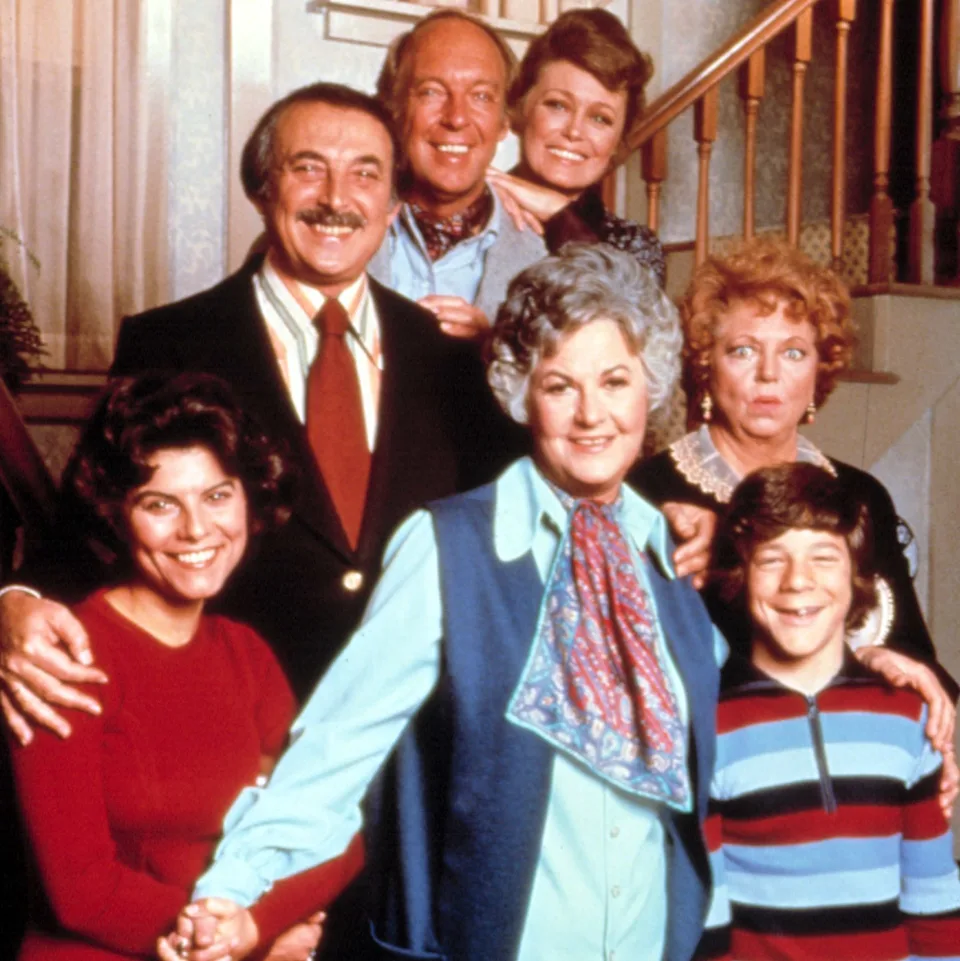
The fall of 1974 marked the first time one of Lucy’s series or a show from the Danny Thomas family tree didn’t occupy the Monday at 9:00 slot. Sitcoms had changed dramatically in the early 1970s, so CBS went in a completely different direction and slotted Norman Lear’s controversial Maude series on Mondays. The show, starring Lucy’s Mame co-star, Bea Arthur, was in the top ten each of its two previous seasons on Tuesday night, though ABC’s recent addition of Happy Days threatened Maude’s numbers. So CBS replaced it on Tuesday with its spinoff, Good Times, which crushed Happy Days head-to-head during 1974-75, only to have Happy Days reverse the trend the following season as The Fonz became a phenomenon.
Maude aired several topical segments in its first two seasons. This year, however, the series largely avoided controversy, with a John Wayne guest appearance and the addition of a wacky new maid, Mrs. Naugatuck, providing the highlights. Maude, followed by the popular new series Rhoda, dominated the ratings, with Maude in 9th, and Rhoda in 6th. CBS’ Monday night revival hurt Monday Night Football, as it dropped to 32nd in the ratings, although its mid-season replacement S.W.A.T. proved to be a worthy competitor to CBS, finishing 16th. ABC soon realized the difficulty in placing a series in the timeslot, as the return of Monday Night Football the following fall forced ABC to move S.W.A.T. to Saturday, where it lasted only one season.
Despite Maude’s popularity, CBS moved it back a half hour in the fall of 1975, with TV’s number one show, All in the Family, taking the 9:00 slot. Why would CBS move that series from its longtime slot on Saturday at 8:00? The National Association of Broadcasters approved a new “Family Hour” from 8-9(ET) that stated no programming could air during that time that was “inappropriate for general family viewing.” Norman Lear preferred CBS move All in the Family out of the Family Hour rather than change the series. The rule was difficult to enforce and was eventually ruled invalid in November 1976, but it caused considerable controversy during its brief existence.
The new timeslot wasn’t the only change that season for All in the Family. The show had a new executive producer and director, and Sally Struthers held out, missing four episodes. Meanwhile, the Stivics moved next door and welcomed a new son. New Executive Producer Hal Kanter left the show after just six weeks, and Producer Lou Derman died late in the season, the result of a heart attack while driving to work during a long week. Despite the issues, All in the Family remained the overwhelming number one show for the season and decisively defeated Monday Night Football and NBC’s movie. Much of the early season, All in the Family, Maude, and CBS’ early evening Monday night comedies Rhoda and Phyllis were the top four shows on television. All finished among the top seven shows at season’s end.
In the fall of 1976, CBS looked to expand its comedy success to Wednesday night, moving All in the Family opposite ABC’s hit Baretta. CBS reasoned it would be easy to move Maude back into the Monday at 9:00 timeslot, and it would continue to be a top ten favorite. It turned out to be a miscalculation. Early evening series Rhoda and Phyllis both endured cast shake-ups and saw their ratings drop considerably. And, All’s Fair, another Norman Lear series, never caught on airing after Maude, despite good reviews and notable stars in Richard Crenna and Bernadette Peters. In addition to weaker shows surrounding Maude, the competition grew tougher. NBC’s movie ranked 20th, thanks in part to a highly rated showing of Gone With the Wind. Monday Night Football finished 22nd, and its mid-season movie replacement soared into 3rd place. Maude was only good for 31st that season, a low for a CBS Monday at 9:00 sitcom.
With The Mary Tyler Moore Show ending in the spring of 1977, CBS was eager to put co-stars Betty White and Georgia Engel in a new comedy. One idea had them becoming nuns/teachers, another would have White’s character starring in a sitcom, and still another would be a science fiction parody. In the end, the producers settled on making White an actress starring in a Police Woman-like parody called The Betty White Show. The pilot, co-starring Engel and John Hillerman, turned out great, and CBS had such high hopes for the series that they placed it on Monday at 9:00. Most experts smelled a hit. Although TV Guide was skeptical about its chances due to tough competition and a weak lead-in, Young Dan’l Boone. The aging Maude and a new doctor series, Rafferty, would follow.
The Betty White Show finished in the top ten in two of its first three weeks. However, it soon became clear the ratings would be inconsistent, often based on the strength or weakness of the football game and movie opposite the series. Although the numbers were somewhat disappointing, it still stood in a respectable 31st place for the season in November, although one particularly low-rated segment fell into the Nielsen bottom 10. In mid-November, CBS made the shocking announcement that the series was canceled, and its final four episodes would air at 9:30, before being replaced by a new comedy, Another Day. Maude, which had slightly lower numbers than The Betty White Show, would move back into the 9:00 timeslot. After the cancellation was announced, the remaining episodes achieved lower ratings, and the series finished 48th for the season. This is the first time CBS changed its Monday at 9:00 sitcom during a season.
Grant Tinker attributed its failure to the difficulty of presenting White in a new character while Sue Ann Nivens was still fresh in viewers’ minds, and to CBS giving up on the show too quickly. CBS execs later admitted they may have been hasty in cancelling the series, and the scheduling did The Betty White Show few favors. The network was likely expecting too much, based on Maude’s merely okay ratings in the same slot the previous season and the steadily declining numbers of The Mary Tyler Moore Show in the two seasons prior. White noted that former Moore show producers Ed. Weinberger and Stan Daniels were only with the show for the pilot. While the series had an impressive writing staff, only a couple of the episodes lived up to the pilot. The series suffered from too many one-joke characters and an oddly cheap look, shot on video with unattractive sets and graphics.
Ultimately, the series’ cancellation can be attributed to the difficulty of a new show competing against Monday Night Football (16th) and NBC’s movie (15th), both of which had outstanding seasons.
Moving Maude back to 9:00 didn’t move the needle, and CBS decided not to go ahead with Another Day on Monday. So CBS switched Maude to Saturday and held Another Day for a Saturday slot in the spring. Both did poorly on that night and left the air at season’s end. CBS was disappointed that its formerly top ten combo of M*A*S*H and One Day at a Time had dropped to 16th and 17th place, respectively, opposite ABC’s powerhouse combo of Three’s Company and Soap. Moving them to Monday night from 9-10 in January 1978 helped both series soar back into the top ten, as CBS regained the top spot in the timeslot again.
In the fall of 1978, M*A*S*H began its 7th season, now in a comfortable groove on Monday nights at 9:00. While there was speculation about how long a show about a three-year war could last, there were no ominous warnings about the series ending anytime soon. M*A*S*H easily won the timeslot, finishing 7th in 1978-79. It increased its victory over football and movies the next year and landed in 4th place, despite losing co-star Gary Burghoff. CBS remained content to leave M*A*S*H in its slot, as it helped launch new series House Calls and Flo behind it, and also made WKRP in Cincinnati a hit during the year it spent with M*A*S*H as its lead-in.
In the 1980s, viewers got an answer to the question of when M*A*S*H would say goodbye. And it said goodbye in a spectacular manner.
Leave a Reply