
Network sitcoms were thriving in the mid-1960s. With a string of hits introduced between 1960 and 1965, eight sitcoms were among the top 16 shows during the 1965-66 season. By the 1969-70 season, there were only eight sitcoms among the top 30 shows. A year later, Here’s Lucy and Mayberry R.F.D. were the only sitcoms among the 18 highest-rated series.
Not only were the popular sitcoms from the first half of the decade in decline, but few new hits were introduced during the 1967-68, 1968-69, and 1969-70 seasons. Of the sitcoms debuting during those three seasons, only Julia, The Doris Day Show, Here’s Lucy, and Mayberry R.F.D. ever hit the top 10. What’s more, Julia and The Doris Day Show were only in the top 10 for one season each. Here’s Lucy and Mayberry R.F.D. were technically new shows, but were largely continuations of discontinued hits, The Lucy Show and The Andy Griffith Show.
This resulted in fewer sitcom showdowns during the final three seasons of the decade. Here are the shows that went head-to-head.
1967-68
The Second Hundred Years vs. The Beverly Hillbillies on Wednesday at 8:30 p.m. (ET)
The Beverly Hillbillies creator Paul Henning was inspired to devise a series about people who had no knowledge of the modern world. Rather than find a magical solution, he cleverly created characters from so far back in the hills that they were amazed by how the rest of the world lived. The show became so popular that it was the number one show in its first two seasons and was still in the top 10 (7th) during the 1966-67 season.
Going into its sixth season in the fall of 1967, it faced a new ABC sitcom, The Second Hundred Years. Its new competitor also featured a character that had difficulty adjusting to the modern world. However, the creators of this series came up with a less credible concept. The main character was unfrozen after being buried in an avalanche at the turn of the century. Revived in 1967, he looked far younger than his senior citizen son and was identical to his grandson, even though his real age was 100.
Curious viewers tuned in to a few early episodes of The Second Hundred Years before the ratings fell. The Beverly Hillbillies remained mostly steady, dropping only slightly to 12th place. The Second Hundred Years not only had to contend with the more popular sitcom, but also with the last half-hour of NBC’s 90-minute western The Virginian, the 14th highest-rated series of the season. The Second Hundred Years lasted only one season, while its competitors each hung on until 1971.
Winner: The Beverly Hillbillies
My Three Sons vs. Get Smart on Saturday at 8:30
After running for seven years on Thursdays, My Three Sons moved to Saturday in the fall of 1967. CBS switched its timeslot so it would no longer have to face ABC’s top sitcom, Bewitched. In its new timeslot, it would be taking on NBC’s successful sitcom Get Smart.
The timeslot move worked. Boosted by a new setting, a new cast member (Tina Cole), and a wedding storyline, My Three Sons bested Get Smart, finishing 24th in the Nielsen ratings, while Get Smart dropped to 35th. Although the timeslot winner was ABC’s The Lawrence Welk Show in 17th place. NBC bumped Get Smart up to the 8:00 timeslot the next season to avoid competition with My Three Sons and The Lawrence Welk Show.
Winner: My Three Sons
1968-69
The Ugliest Girl in Town vs. Blondie on Thursday at 7:30 p.m.
ABC led off its Thursday night lineup in the fall of 1968 with a new sitcom that had an outrageous premise. The Ugliest Girl in Town featured a man who gets work as a model by dressing as a woman. He accepts the work so he can relocate to London to be with his girlfriend. CBS countered with Blondie, based on the successful comic strip and movie series. A 1957 attempt to turn the franchise into a weekly sitcom failed.
Viewers did not accept the silliness of The Ugliest Girl in Town, and the series was cancelled at mid-season. Blondie was equally unsuccessful and short-lived. NBC’s Daniel Boone benefited from the weak competition and finished 21st in the season’s Nielsen ratings.
Winner: No One
My Three Sons vs. The Ghost & Mrs. Muir on Saturday at 8:30 p.m.
After defeating Get Smart the previous season, My Three Sons faced new sitcom competition in the fall of 1968. NBC scheduled The Ghost & Mrs. Muir, based on the 1947 movie of the same name, in the timeslot.
The Ghost and Mrs. Muir got off to a solid start in the tough timeslot. By mid-season, it only trailed My Three Sons by a few places on the Nielsen chart. However, My Three Sons, which featured a popular pregnancy storyline, had a strong second half of the season and finished in 14th place. The Ghost & Mrs. Muir began losing viewers and finished the season in 41st place, trailing both My Three Sons and ABC’s The Lawrence Welk Show (28th place). Spooked by its declining numbers, NBC surprisingly dropped The Ghost & Mrs. Muir. Star Hope Lange won an Emmy for the series, and ABC picked the show up for the fall of 1969.
Winner: My Three Sons
1969-70
The Ghost & Mrs. Muir vs. Family Affair on Thursday at 7:30 p.m.
In need of hit sitcoms, ABC gave The Ghost & Mrs. Muir a second chance after its cancellation by NBC. Unfortunately for that series, CBS also took aim at the timeslot with its hit Family Affair, which had just finished in 5th place in the Nielsens the previous season in a much later Monday timeslot.
It was no contest. Viewers followed Family Affair to the new night, and it once again landed in 5th place in the Nielsen Ratings. The overwhelmed The Ghost & Mrs. Muir moved to Friday at 8:30 at mid-season. It was cancelled again at season’s end, although Hope Lange won a second straight Emmy.
Winner: Family Affair
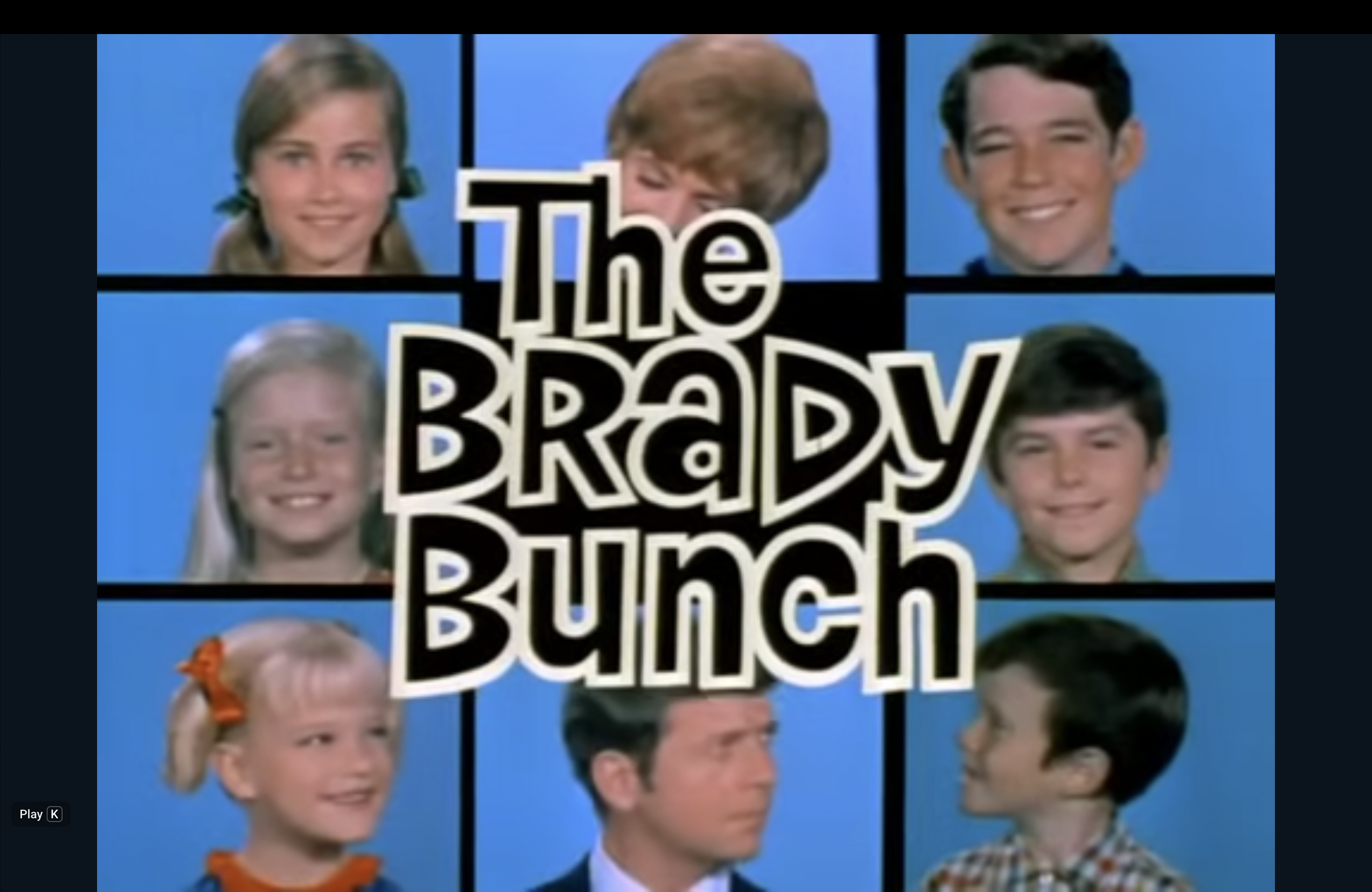
The Brady Bunch vs. The Good Guys on Friday at 8:00 p.m.
Friday was a quiet night during the 1969-70 season. No series on any network hit Nielsen’s top 30. ABC launched new sitcom, The Brady Bunch, as part of its Friday night lineup. CBS’ second-season sitcom The Good Guys moved to the same Friday timeslot. It finished a respectable 36th in the ratings on Wednesday during the 1968-69 season. However, CBS moved The Beverly Hillbillies into its 8:30 timeslot to make way for the new drama Medical Center at 9:00. CBS considered moving The Good Guys to Sunday at 7:30, but needed to fill a half-hour after Get Smart on Friday, after the network talked Don Adams into filming another season of his series after it was cancelled by NBC.
Once a multi-cam show, the second season of The Good Guys was shot with a single camera and set in a new location. The changes were unpopular, and the show was cancelled at mid-season, replaced by a brief Tim Conway sitcom. While The Brady Bunch didn’t exactly do gangbusters, and may have been cancelled by a stronger network, ABC renewed it. Of course, it went on to a five-year run with endless revivals.
Winner: The Brady Bunch
Mr. Deeds Goes to Town vs. Hogan’s Heroes on Friday at 8:30 p.m.
Following The Brady Bunch, ABC debuted another new sitcom, Mr. Deeds Goes to Town, based on the old Gary Cooper movie. CBS dominated the timeslot the previous season with Gomer Pyle, U.S.M.C., the second-highest-ranked show. However, star Jim Nabors decided to end the series so he could host a variety show that CBS scheduled on Thursdays. Fifth-year sitcom Hogan’s Heroes was scheduled to replace it. Once a big hit in this Friday timeslot, Hogan’s Heroes received middling ratings the previous two seasons on Saturdays.
ABC dropped the low-rated Mr. Deeds Goes to Town at mid-season. While Hogan’s Heroes’ numbers paled in comparison to Gomer Pyle’s, it got about the same ratings as it did on Saturday night, and won the timeslot.
Winner: Hogan’s Heroes
Leave a Reply